BTEC Sport
OVERVIEW
BTEC Sport allows those with an interest in a career in sport to explore a wide range of subject matter in a continuous assessment course.

For those interested in sport, we offer two options: the BTEC Extended Diploma in Sport (equivalent to three A-levels), and the BTEC Diploma in Sport (equivalent to two A-levels).
Both are ideal options for the pupil who wishes to devote either all, or the large majority, of their Sixth Form learning to the study of sport. These courses give pupils a real insight to a wide variety of fascinating issues relating to the sporting world and deals with the principles and practices within the sporting industry. Those pupils who wish to study an additional A-level are encouraged to do so and advice can be given on those subjects which work well in conjunction with the BTEC.
Both levels of BTEC Sport are academic and vocational, and pupils are assessed through a mix of externally set tasks and exams and internally set projects and assignments. Studying this subject enables pupils to gain an in-depth knowledge of a range of topics that can be vital in improving the sporting performance of both themselves and others.

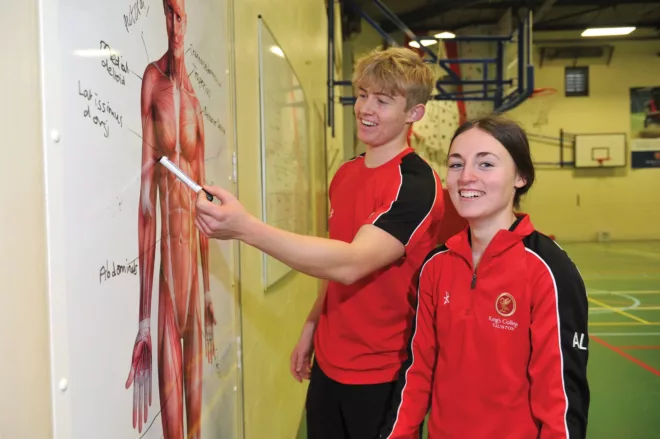
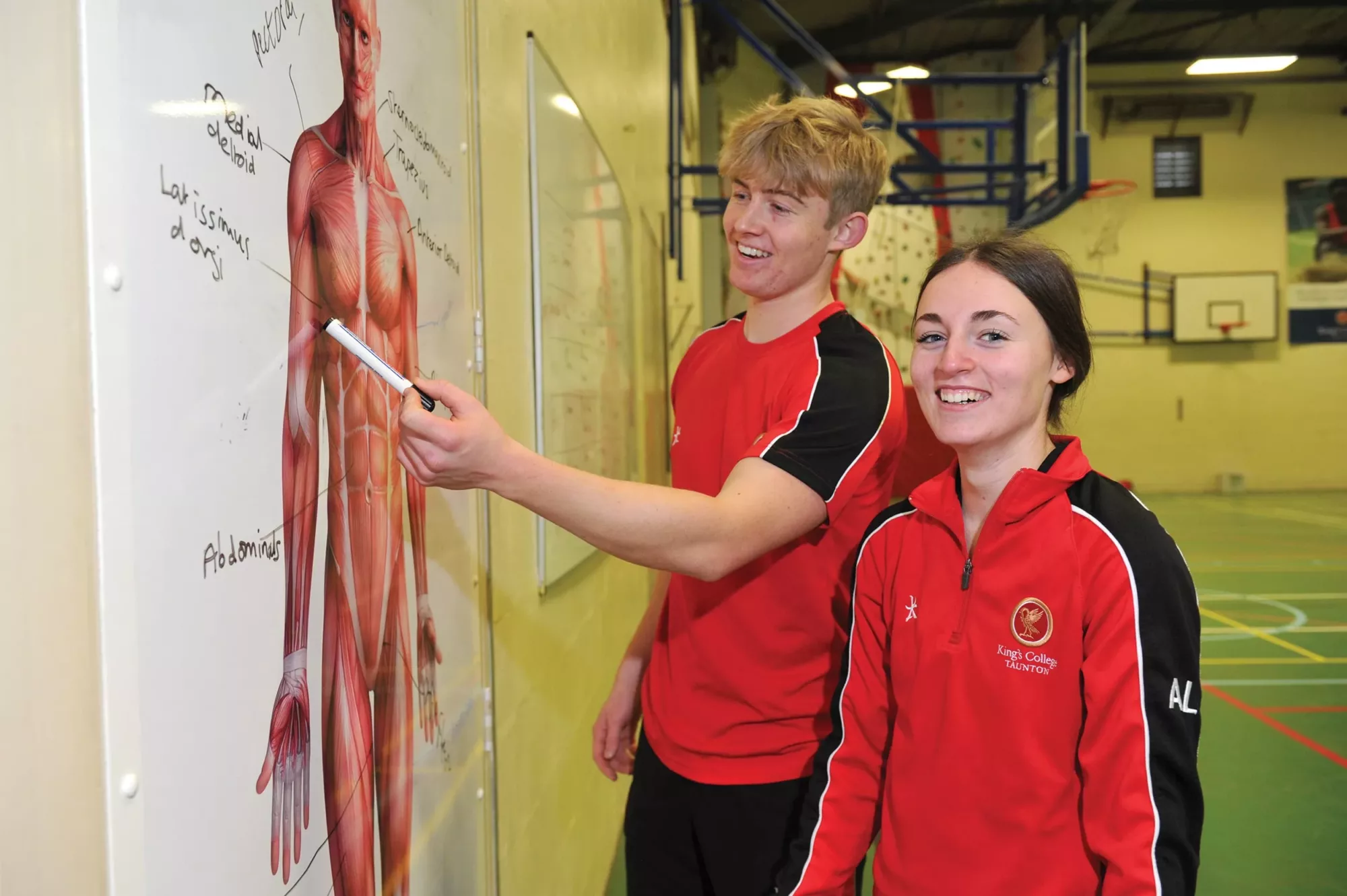
Fourteen units are covered over two years in the extended qualification, and their focus shifts between those with a more practical theme (for example, sports coaching and fitness programming) and those that have the scientific focus (for example, Anatomy and Physiology and Sporting Injuries). Nine units are covered in the diploma.
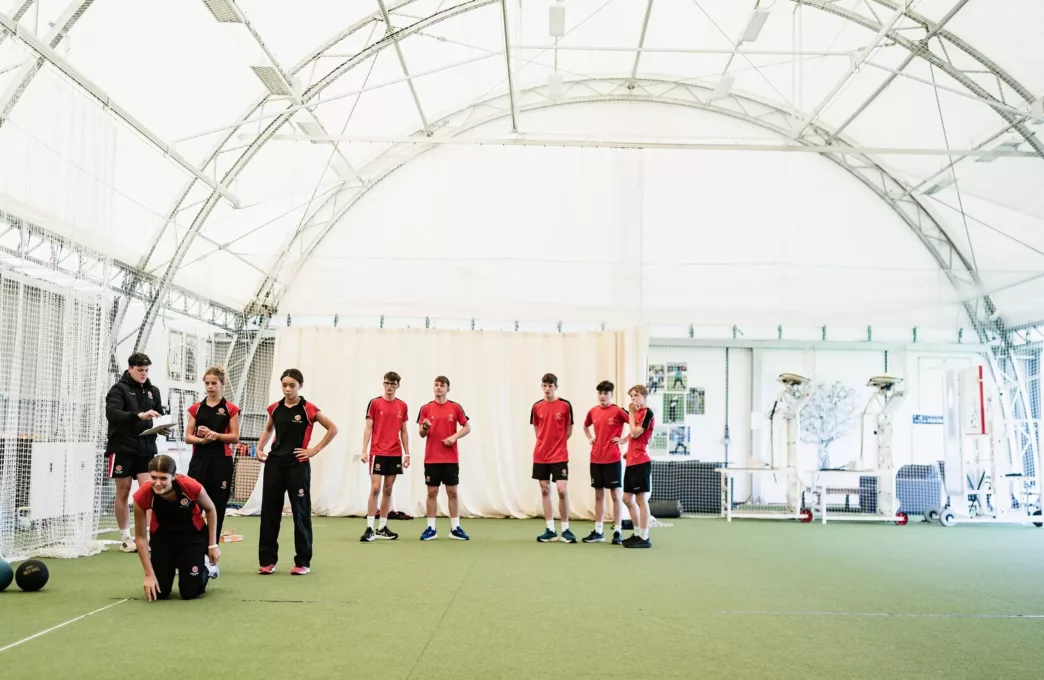
Pupils are also given opportunities to gain qualifications and experience in other areas, especially in practical areas. We aim for pupils to achieve qualifications in coaching specific sports, such as basketball and cricket, First Aid and the National Pool Lifeguard Qualification (NPLQ).
Studying either the BTEC Diploma or Extended Diploma in Sport at Sixth Form can lead onto a variety of sports-related, and nonsports- related degree subjects. Sport science undergraduate degrees are popular options, but this qualification also opens the door for a focus on sport psychology, nutrition, sports therapy, coaching and development degrees. In recent years pupils have also gone on from the Extended Diploma to study business and social science courses. For those who pursue sport, possible career options include sports journalism, sports science, strength and conditioning, sports development, physiotherapy, sports coaching, sport and business, fitness training, sports marketing, sports therapy and PE teaching.

Three units will be set as ‘tasks’ by Pearson (Unit 2 – Fitness training and programming for health, sport and wellbeing, Unit 19 – Development and provision of sport and physical activity and Unit 22 – Investigating business in sport and active leisure).
- Extended Certificate- 4 units over 2 years, of which 3 are mandatory and 2 external exams.
Tasks are pre-issued case studies that pupils have a week or two to prepare for, prior to presenting a final written submission in a controlled environment based upon a real-life scenario.
Diploma
From the nine units:
- Six will be internally set and assessed. Three units will be externally assessed.
- One will be a written exam of one hour and 30 minutes (Unit 1 – Anatomy and physiology).
- Two units will be set as ‘tasks’ by Pearson (Unit 2 – Fitness training and programming for health, sport and wellbeing, and also Unit 22 – Investigating business in sport and active leisure).
- Tasks are pre-issued case studies that pupils have a week or two to prepare for, prior to presenting a final written submission in a controlled environment based upon areal-life scenario.
OUR SYLLABUS
Students can choose between a Diploma (equivalent to two A-levels) and an Extended Diploma (equivalent to three A-levels). They explore the entire sports industry, covering topics such as anatomy, fitness, coaching, sports injuries, business, and outdoor adventure activities.
- Diploma: Nine units over two years (six internally assessed, three externally assessed)
- Extended Diploma: 14 units over two years (10 internally assessed, four externally assessed)
Assessment methods include exams, presentations, coaching sessions, written assignments, and practical demonstrations, ensuring students can showcase their knowledge and skills in various ways.
WHY STUDY BTEC SPORT AT A-LEVEL?
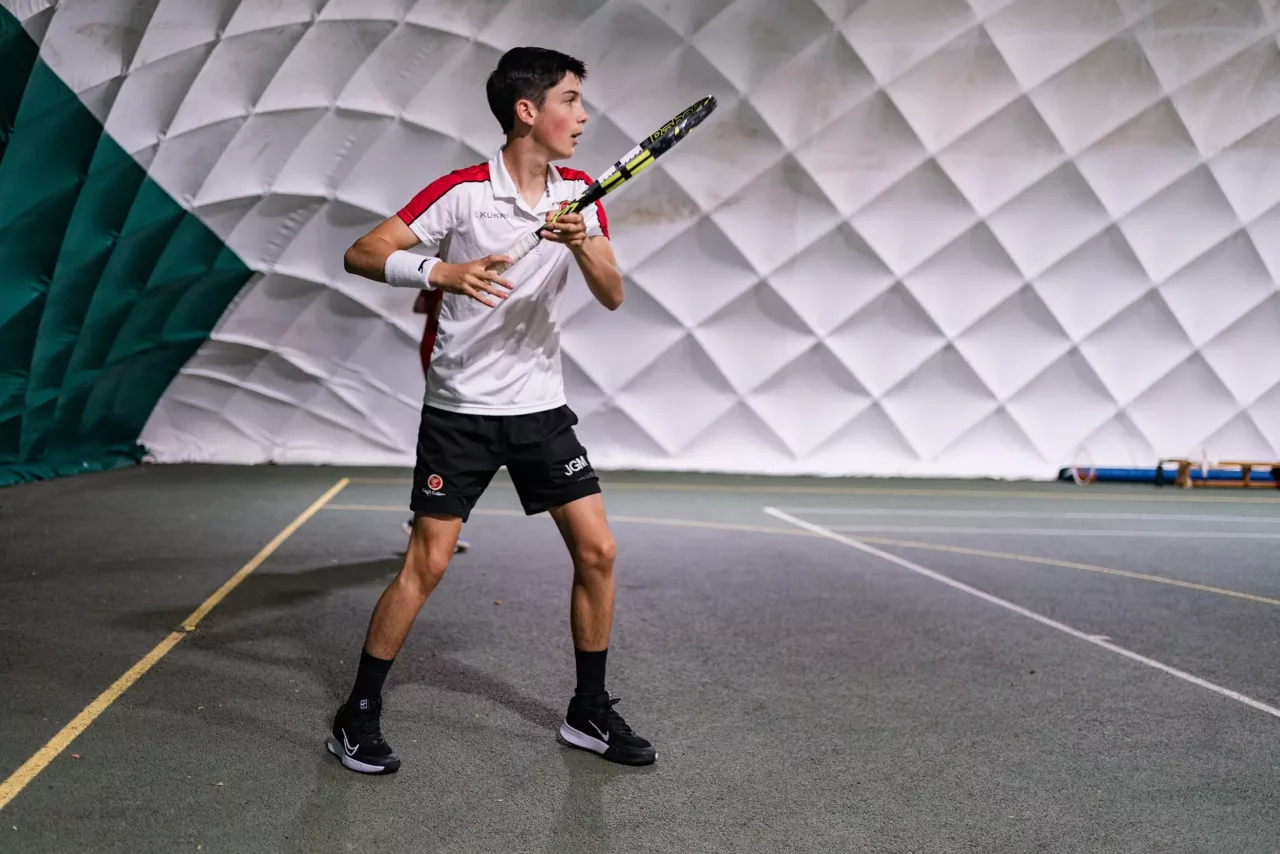
It’s an ideal option if you wish to devote either all, or the majority, of your Sixth Form learning to the study of sport. These courses offer a real insight into a wide variety of fascinating issues relating to the sporting world and deal with the principles and practices within the industry. It enables you to gain an in-depth knowledge into improving the sporting performance of both yourself and others. For those who pursue sport, potential career options include sports journalism, sports science, strength and conditioning, sports development, physiotherapy, sports coaching, sport and business, fitness training.
Pupils studying BTEC Sport undertake a wide variety of external events and enrichment opportunities, all of which develop their understanding of the subject matter and enhance their career prospects. Recent examples include visits to Exeter University and Somerset County Cricket Club, outdoor adventure activities, and practical coaching and sports massage training.
In addition, pupils have the chance to attend talks and interviews from industry professionals, undertake coaching experience with junior teams, and complete coaching and lifeguard qualifications, such as the National Pool Lifeguard Award and First Aid courses.
- Independence, time management, and confidence
- Presentation, writing, and analytical skills
- Leadership, teamwork, and adaptability
- High levels of self-motivation and initiative
Tom Banton – Professional cricketer
Nathan Gilchrist – Professional cricketer
Taylor Ingham-Hill – Sports Science graduate, considering a career in teaching
Darc Browne – Sports therapist for the West Indies Cricket team